


- This event has passed.
화공신소재공학 세미나
July 9 @ 10:00 am - 12:00 pm
장소: 연구협력관 B101호
연사: Weiran Zheng (Associate professor, Guangdong Technion-Israel Institute of Technology)
제목: In Situ Strategies to Decode Electrode Deactivation
Abstract: Electrode deactivation is the process by which the catalytic efficiency of an electrode surface toward a specific reaction diminishes over time during operation. It remains largely overlooked. Using water electrolysis as an example, many ‘novel’ catalysts demonstrate initial activity that rivals traditional benchmarks like RuO2, yet they frequently suffer from rapid performance decay under continuous operation. Recent research indicates that this deactivation is driven by the dynamic structural and chemical transformations of the catalyst within the complex, coupled environment of the electrolyte-electrochemical interface. Therefore, employing real-time in situ monitoring is crucial not only for identifying the actual active species involved in the reaction but also for uncovering the specific deactivation pathways and the factors that control them. This talk provides a systematic overview of common deactivation mechanisms in electrocatalysis and discusses effective in situ electrochemical characterization strategies. It will focus on the practical application of techniques such as in situ UV-vis spectroelectrochemistry, in situ electrochemical mass spectrometry, and time-resolved electrochemical impedance analysis to analyze ‘promising’ catalysts such as metal-organic frameworks. Lastly, the seminar will address the inherent limitations of these in situ methods, including challenges in spatiotemporal resolution and signal attribution, to highlight why a synergistic, multi-technique approach is necessary to fully understand the dynamic evolution of catalysts and their long-term degradation.
Biography: Weiran Zheng is an associate professor at Guangdong Technion-Israel Institute of Technology (Shantou, China). His research interests focus on developing operando electroanalytical methods to study interfacial dynamics during electrochemical evolution, particularly the failure mechanisms of electrocatalysts, thereby enabling the prediction of catalyst lifetime and the rational design of durable electrocatalysts. He is also interested in standardizing electrochemical methods to ensure data integrity and enable meaningful benchmarking. He has published more than 60 papers, with around 4200 citations. More information can be found at www.thezhenggroup.com.
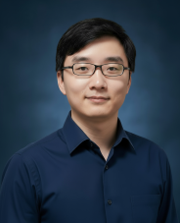
연사: Lawrence Yoon Suk Lee (Professor, Department of Applied Biology and Chemical Technology, the Hong Kong Polytechnic University)
제목: Water Electrolysis: A Pathway to Green Hydrogen Production
Abstract
Driven by the growing need for clean and sustainable energy sources, a number of carbon-neutral energy conversion technologies have been extensively explored over recent years, which include photo- and electrocatalytic water-splitting systems, fuel cells, and metal ion batteries. In particular, water electrolysis, consisting of the hydrogen evolution reaction (HER) and oxygen evolution reaction (OER), is considered a promising and efficient way to produce a clean energy carrier, hydrogen, to meet such energy demands. Green hydrogen produced by renewable-energy-powered water electrolysis could help resolve the energy crisis and cut our carbon footprint at the same time.
So far, the most efficient catalysts developed for both HER and OER make use of precious metals, which largely hinders their wide application due to their high cost and limited availability. Transition metal compounds based on earth-abundant elements can offer an economically viable platform for electrocatalytic chemical and energy conversions. In terms of catalytic efficiency and stability, however, these catalysts still need proper tuning of surface properties, electronic configuration, and morphology to win over the noble-metal-based ones. In this talk, several strategies and material systems we have developed to realize effective water-splitting catalysis will be presented with a special focus on the cases of emerging material systems and their characterization.
Biography
Prof. Lawrence Yoon Suk Lee earned his Ph.D. from McGill University, Canada, in 2006 and currently serves as a Professor in the Department of Applied Biology and Chemical Technology, the Hong Kong Polytechnic University. He leads a research group specializing in electrochemistry, with a focus on the design and development of advanced nanomaterials and nanocomposites for (photo)electrocatalytic applications, including water splitting and CO2 reduction.
Prof. Lee’s work centers on unraveling structure–activity relationships to optimize reaction mechanisms, contributing to breakthroughs in sustainable energy technologies. His research interests also encompass the development of electrode materials for lithium- and sodium-ion batteries, as well as the environmentally responsible upcycling of spent cathode materials.
Employing cutting-edge electrochemical and photochemical techniques, alongside state-of-the-art characterization tools, Prof. Lee’s team investigates the atomic structures of nanomaterials and their catalytic evolution, aiming to advance the science of sustainable energy conversion and storage.
